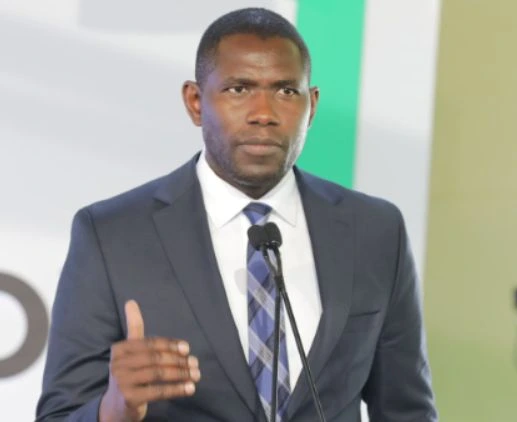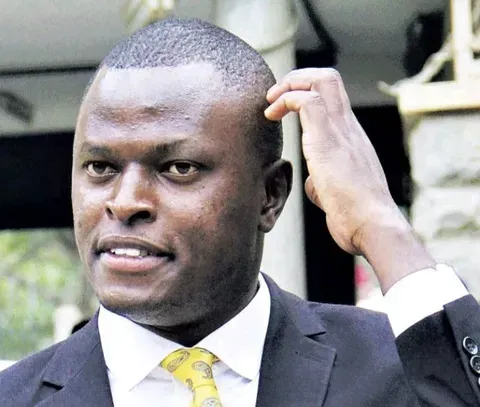
The mist swirling around the peaks of Mount Kenya has often mirrored the complexity of its politics, but rarely has the atmosphere been as charged as it is today. At the epicenter of this modern political tempest stands Kiharu MP Ndindi Nyoro, a figure who has evolved from a staunch loyalist into a lightning rod for regional debate.
Recent remarks from prominent leaders within the Mount Kenya region have shifted from subtle hints to sharp, public rebukes. The accusations are heavy: Nyoro is being labeled a "pawn" of external forces, allegedly deployed to weaken regional unity and dismantle the traditional power structures that have long defined the GEMA (Gikuyu, Embu, Meru) political block. However, as the rhetoric intensifies, a fundamental question emerges: Is this a genuine defense of regional integrity, or a desperate attempt to silence a dissenting voice in an increasingly fluid political landscape?
Moving Beyond the "Pawn" Narrative
In the high-stakes game of Kenyan politics, the "external forces" narrative is a time-honored weapon. It is designed to delegitimize a leader by suggesting they lack agency—that their thoughts and actions are bought and paid for by outsiders. When applied to Ndindi Nyoro, this narrative serves to isolate him from the very community he represents.
But dismissing a leader as a mere instrument for outside interests is a dangerous oversimplification for several reasons:
- It Erases Intellectual Agency: Nyoro, an economist by training, has often grounded his political stances in fiscal arguments. To ignore his ideas by claiming they are scripted by others ignores the substance of the regional debate.
- It Weaponizes Character: Constant character assassination shifts the focus away from policy and performance. When leaders spend their time defending their loyalty, they aren't spending time discussing the falling prices of coffee or the rising cost of living.
- It Limits Community Contribution: When a leader is boxed into a "traitor" narrative, their ability to advocate for their constituents in the national arena is severely hampered. The community loses a seat at the table because that seat is constantly being pulled out from under the representative.
Respect for diverse viewpoints is not just a democratic ideal; it is a practical necessity. Leadership thrives when inclusivity and progress are the primary goals, not the enforcement of a single, rigid line of thought.
The True Cost of Division
The Mount Kenya region has historically been the heartbeat of the nation’s economy and its most significant political anchor. However, history also shows that when the mountain is divided, its bargaining power at the national level evaporates.
The current friction—characterized by internal policing and public spats—carries a heavy price tag. Internal fragmentation creates a vacuum that other political players are all too happy to fill. When leaders spend more energy trading barbs than building bridges, the "safeguarding" of regional interests becomes a secondary concern.
True strength doesn't come from a forced, hushed consensus. It comes from solution-oriented discussions where disagreement is seen as a tool for refinement, not a sign of betrayal. The community benefits most when its representatives can sit at a table, disagree passionately about the "how," yet remain unshakably unified on the "why"—the prosperity and security of the people.
A Call for Collaborative Leadership
The path forward requires a radical shift in tone. To safeguard both the unity and the continued development of the region, Mount Kenya's leadership must adopt a new set of engagement rules:
- Prioritize Substance Over Allegiance: Focus on the message, not just the messenger. If a leader proposes a solution for regional development, it should be judged on its merits, regardless of who "sponsored" the idea.
- Protect the Political Platform: The region must ensure that every leader has the space to contribute to the regional agenda. A culture of fear or "gatekeeping" only encourages leaders to look outside the region for support.
- Eyes on the Long-Term Prize: Political cycles come and go, but the needs of the people—education, infrastructure, and economic opportunity—remain constant. Unity should be a means to achieve these ends, not an end in itself used to maintain a status quo.
The Mountain Must Stand Together
Ultimately, the future of Mount Kenya rests on the shoulders of those willing to prioritize respect and collaboration over ego and suspicion. The mountain is at its highest, and its influence at its peak, when its leaders stand together.
It is time to move past the rhetoric of "external forces" and "pawns." The people of Mount Kenya deserve a leadership that is more interested in building a future than in litigating the past. By embracing diverse viewpoints and focusing on collective progress, the region can ensure that its voice remains not just loud, but impossible to ignore.