President William Ruto has reaffirmed his administration’s commitment to transforming the living conditions of residents in Kenya’s informal settlements through the development of modern, well-equipped housing units. During an inspection of the ongoing Kibera Soweto East Zone B Affordable Housing Project (AHP) on Tuesday afternoon, the Head of State emphasized that the government’s housing agenda will proceed successfully despite opposition from critics.
“The transformation of informal settlements is not just about housing; it is about restoring dignity, improving livelihoods, and creating opportunities for millions of Kenyans. We are determined to ensure that every Kenyan, regardless of income, has access to decent and affordable housing,” President Ruto stated.
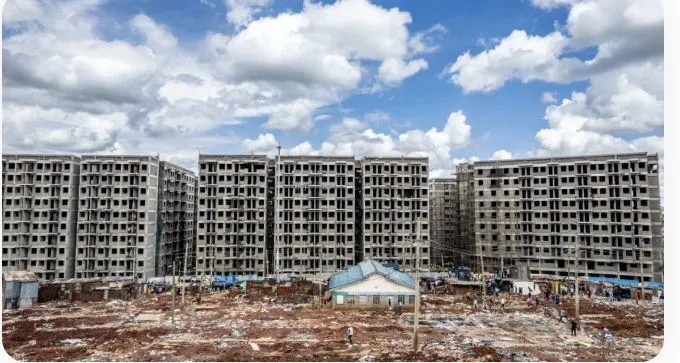
The Kibera Soweto East Zone B project, with an investment of Ksh. 7.4 billion, is now over 80 percent complete. The development will feature a total of 4,054 housing units, comprising 3,052 one-room units, 1,100 two-room units, and 313 three-room units. These homes have been meticulously designed to provide dignified living spaces for low- and middle-income residents while creating a sustainable urban environment.
In addition to housing, the project incorporates essential social amenities, including a primary school and kindergarten, a commercial facility, a health center, and recreational areas to cater to the holistic needs of residents. The design also prioritizes flood control, featuring an open drainage system and strategically placed culverts to channel rainwater directly to the Ngong River, mitigating the risk of flooding during the rainy season.
Key infrastructure upgrades are also part of the project. Internal access roads have been improved, including a paved route linking to Joash Olum Primary School, ensuring easier mobility within the estate. Water supply is supported by two boreholes sunk within the facility, while the sewer line and an internal solid waste management system aim to promote hygienic living conditions.
The housing initiative is already making a significant economic impact. Over 2,500 direct jobs have been created for local residents, largely due to the high demand for locally manufactured materials. Doors, windows, and balustrades are being sourced from the local jua kali sector, offering an income boost to artisans and small-scale manufacturers within the community. This approach aligns with the government’s broader goal of stimulating local economic activity while addressing housing shortages.
The Kibera AHP is part of a wider strategy by the State Department for Housing and Urban Development to unlock more housing opportunities within Nairobi’s informal settlements. Plans are already underway to revive the stalled Kenya Railways Corporation housing project in Kibera, which is expected to provide an additional 900 units. These projects aim to address the chronic housing deficit in Kenya’s urban areas, which has left thousands living in overcrowded and often unsafe conditions.
President Ruto also highlighted that housing development is intertwined with broader social transformation. “When we provide decent homes, we are not just building structures; we are creating communities where children can learn safely, families can thrive, and residents can enjoy a better quality of life,” he said. The emphasis on education and healthcare within the housing projects reflects the government’s commitment to integrating social infrastructure with residential development.
Experts note that Nairobi’s informal settlements, including Kibera, face multiple challenges such as inadequate housing, poor sanitation, and limited access to basic services. By integrating essential amenities and upgrading infrastructure, projects like the Kibera Soweto East Zone B development are addressing these challenges head-on. Residents stand to benefit from a more organized urban environment, improved sanitation, better access to education and health services, and safer living conditions overall.
The government’s affordable housing program also aligns with Kenya Vision 2030, which seeks to promote sustainable urban development and improve the quality of life for all citizens. By focusing on inclusive housing solutions, the initiative is ensuring that even low-income residents can access safe and dignified living spaces, thereby reducing urban inequality and promoting social cohesion.
As the Kibera Soweto East Zone B project nears completion, anticipation is growing among residents eager to move into their new homes. For many, the project represents more than just physical housing; it symbolizes hope, stability, and an opportunity to break free from the challenges associated with informal settlements.
With continued government support, local job creation, and strategic investment in infrastructure, Kenya’s informal settlements are gradually transforming into thriving urban communities. The Kibera project, along with other initiatives planned across Nairobi and other urban centers, demonstrates that affordable housing development can be a catalyst for social and economic progress, reinforcing the government’s pledge to uplift the living standards of every Kenyan.
“The transformation of informal settlements is not just about housing; it is about restoring dignity, improving livelihoods, and creating opportunities for millions of Kenyans. We are determined to ensure that every Kenyan, regardless of income, has access to decent and affordable housing,” President Ruto stated.
The Kibera Soweto East Zone B project, with an investment of Ksh. 7.4 billion, is now over 80 percent complete. The development will feature a total of 4,054 housing units, comprising 3,052 one-room units, 1,100 two-room units, and 313 three-room units. These homes have been meticulously designed to provide dignified living spaces for low- and middle-income residents while creating a sustainable urban environment.
In addition to housing, the project incorporates essential social amenities, including a primary school and kindergarten, a commercial facility, a health center, and recreational areas to cater to the holistic needs of residents. The design also prioritizes flood control, featuring an open drainage system and strategically placed culverts to channel rainwater directly to the Ngong River, mitigating the risk of flooding during the rainy season.
Key infrastructure upgrades are also part of the project. Internal access roads have been improved, including a paved route linking to Joash Olum Primary School, ensuring easier mobility within the estate. Water supply is supported by two boreholes sunk within the facility, while the sewer line and an internal solid waste management system aim to promote hygienic living conditions.
The housing initiative is already making a significant economic impact. Over 2,500 direct jobs have been created for local residents, largely due to the high demand for locally manufactured materials. Doors, windows, and balustrades are being sourced from the local jua kali sector, offering an income boost to artisans and small-scale manufacturers within the community. This approach aligns with the government’s broader goal of stimulating local economic activity while addressing housing shortages.
The Kibera AHP is part of a wider strategy by the State Department for Housing and Urban Development to unlock more housing opportunities within Nairobi’s informal settlements. Plans are already underway to revive the stalled Kenya Railways Corporation housing project in Kibera, which is expected to provide an additional 900 units. These projects aim to address the chronic housing deficit in Kenya’s urban areas, which has left thousands living in overcrowded and often unsafe conditions.
President Ruto also highlighted that housing development is intertwined with broader social transformation. “When we provide decent homes, we are not just building structures; we are creating communities where children can learn safely, families can thrive, and residents can enjoy a better quality of life,” he said. The emphasis on education and healthcare within the housing projects reflects the government’s commitment to integrating social infrastructure with residential development.
Experts note that Nairobi’s informal settlements, including Kibera, face multiple challenges such as inadequate housing, poor sanitation, and limited access to basic services. By integrating essential amenities and upgrading infrastructure, projects like the Kibera Soweto East Zone B development are addressing these challenges head-on. Residents stand to benefit from a more organized urban environment, improved sanitation, better access to education and health services, and safer living conditions overall.
The government’s affordable housing program also aligns with Kenya Vision 2030, which seeks to promote sustainable urban development and improve the quality of life for all citizens. By focusing on inclusive housing solutions, the initiative is ensuring that even low-income residents can access safe and dignified living spaces, thereby reducing urban inequality and promoting social cohesion.
As the Kibera Soweto East Zone B project nears completion, anticipation is growing among residents eager to move into their new homes. For many, the project represents more than just physical housing; it symbolizes hope, stability, and an opportunity to break free from the challenges associated with informal settlements.
With continued government support, local job creation, and strategic investment in infrastructure, Kenya’s informal settlements are gradually transforming into thriving urban communities. The Kibera project, along with other initiatives planned across Nairobi and other urban centers, demonstrates that affordable housing development can be a catalyst for social and economic progress, reinforcing the government’s pledge to uplift the living standards of every Kenyan.