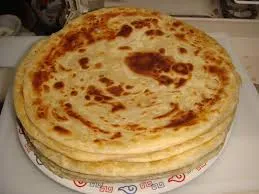
If you’ve ever sat in a kitchen and watched a stack of chapatis grow, you’ve witnessed a miracle of engineering disguised as a simple chore. It is a food that defies the complexity of modern gastronomy. It doesn't require a sourdough starter nurtured over decades, nor does it need a temperature-controlled proofing oven.
It requires a person, a flat surface, and a fire.
Yet, despite its simplicity, the chapati is the heartbeat of millions of homes from the bustling streets of Mumbai to the high-altitude plains of Nairobi. To truly understand the chapati is to understand the history of human migration, the science of steam, and the unquantifiable taste of "home."
The Zen of the Knead
Everything begins with the flour. In its most traditional form, this is atta—a stone-ground whole wheat flour that contains the germ and the bran. It’s nutty, it’s fragrant, and it feels alive.
When you start mixing in the water, you aren't just making food; you’re performing a tactile ritual. Ask any veteran cook, and they’ll tell you they don't use a measuring cup. They measure by the "feel" of the dough against their palms. There’s a specific moment during the kneading process where the shaggy, sticky mess transforms into a smooth, silky ball that bounces back when poked. This is the development of gluten, the protein "web" that will eventually trap steam and allow the bread to rise.
But here is where most beginners fail: The Rest. Human beings need rest to perform, and chapati dough is no different. If you try to roll it immediately, it will be stubborn and elastic, snapping back like a rubber band. You must cover it with a damp cloth and let it sit for at least thirty minutes. During this time, the moisture distributes evenly, and the gluten relaxes. It’s a lesson in patience that translates perfectly to life: sometimes, to get where you're going, you just need to sit still for a while.
The Geometry of Love: The Rolling Process
Rolling a chapati is perhaps the most intimidating part of the process. In many cultures, the ability to roll a perfectly round chapati was once considered a prerequisite for marriage—a standard that is, thankfully, fading, but the pride remains.
There is a specific "flick of the wrist" involved. As the rolling pin moves, the chapati should ideally rotate itself on the board. When you see a pro doing it, it looks like a spinning record under a needle.
But let’s be real: for the rest of us, the chapatis often come out looking like the map of Greenland or a squashed star. Here’s the human truth—the shape doesn't change the flavor. A "map-shaped" chapati made with love and served hot with a dollop of ghee or butter will always beat a perfectly round, factory-made tortilla. The imperfections are where the crispy bits hide.
The Alchemy of the Tawa
The transition from raw dough to cooked bread is where the science gets "cool." When the dough hits the hot tawa (the traditional heavy iron griddle), the water inside the dough turns to steam almost instantly.
If the dough was kneaded well and rolled evenly, this steam is trapped between the layers of the dough. Suddenly, the flat disc inflates. It’s a breathtaking moment—a beige balloon of hot air. This is the "puff." This puffing action is what separates the layers and ensures the bread isn't a dense, heavy brick.
- The Indian Way: Many prefer to finish the chapati (or phulka) directly over an open gas flame for a few seconds. It chars the edges, adds a smoky aroma, and makes the puff even more dramatic.
- The East African Way: Here, the chapati takes a turn toward the indulgent. The dough is coiled with oil or shortening, creating a "laminated" effect similar to puff pastry. It’s fried on the griddle with a bit of oil, resulting in a golden-brown, flaky, multi-layered masterpiece that can be peeled apart leaf by leaf.
More Than a Meal: The Cultural Connection
The chapati is a social connector. In many households, the cook doesn't sit down to eat with everyone else. Instead, they stand by the stove, rolling and flipping, serving each person a fresh, steaming-hot chapati directly onto their plate. It is an act of service and a gesture of hospitality.
It’s also the ultimate "portable" food.
- In India, it’s the "Tiffin" staple, packed into stainless steel boxes with a side of dry potato sabzi for millions of office workers.
- In Uganda and Kenya, it’s the base of the "Rolex" (a rolled egg)—a street-food phenomenon where an omelet is cooked and then rolled inside a fresh chapati. It’s the ultimate breakfast-on-the-go.
A Guide to "Chapati Troubleshooting"
If you are inspired to go to the kitchen right now, keep these human-centric tips in your back pocket to avoid the common pitfalls:
- The "Cardboard" Syndrome: If your chapatis come out hard enough to be used as a weapon, you likely used too much dry flour while rolling. Use just enough to stop it from sticking. Excess flour burns on the pan and dries out the dough.
- The "Pale" Look: If there are no brown spots, your pan isn't hot enough. You want those "beauty marks"—small, charred freckles that signal the natural sugars in the wheat have caramelized.
- The "Storage" Secret: Never leave a cooked chapati out in the open air. It will lose its soul (and its moisture) in minutes. Wrap them in a soft cotton kitchen towel and place them in a thermal container. The steam from the stack will keep them soft for hours.
The Final Bite
At the end of the day, the chapati reminds us that we don't need much to be happy. We need flour, we need heat, and we need someone to share it with. It’s a food that requires you to use your hands, to get a little flour on your apron, and to engage with the process.
It’s not just bread; it’s a circle of life that has been rolling for thousands of years.
Do you think you’d have the patience to master the "perfect puff," or are you more interested in the buttery, flaky layers of the fried version?